
Local Business Web Design built around goals

Why Local Businesses Need Websites Built Around Their Goals

Let’s be honest, a website without a real goal won’t bring in calls, fill out forms, or push people toward a purchase. Most small businesses figure this out after the site goes live and the phone stays quiet (when it’s too late!).

That delay costs time, money, and customers you won’t get back. But when your business goals drive the design, every page gives visitors a clear next step, and your marketing connects naturally.

This article covers why goal-based web design produces better results for local businesses and what it looks like when it’s done right. Read through, and see where your current site is falling short.

The Local Business Web Design Problem

A good-looking Website doesn't mean a well-performing site

Most local business web design prioritizes how a site looks over what it needs to perform well.

A site without a strategy is like opening a store with no products on the shelves. People walk in, look around, and leave without buying anything. Search engines react the same way.

These are the issues that hold most sites back:

  • Appearance Over Objectives: Web design projects usually start with colors, fonts, and layouts, and business objectives never make it onto the list. A polished site with no strategic direction gives visitors nothing to act on.
  • Search Engine Visibility: Search engines rank sites based on structure, load speed, and core web vitals, and none of those come standard with a visually focused build. Without those foundations, your site stays invisible to the people searching for it.

A website that looks fine but produces no results isn’t a cheap mistake. The longer it runs without a strategy, the more revenue you lose.

What Goal-Based Website Design Really Looks Like

The whole process starts with one question: “What does your business need this site to accomplish?

That answer drives the design decisions, the layout choices, and the calls to action across the entire site. In other words, a website built around clear goals works like your best sales department.

This is what that looks like when it’s done right:

The Goal Comes Before the Design

Before anything gets designed, goal-based web design identifies what the business needs the site to accomplish.

Take phone calls as an example. A phone call goal puts your contact details above the fold, with the entire site pushing visitors toward picking up the phone. A lead generation goal, in that case, centers on the opt-in form and the offer.

The goal determines the build, and honestly, most sites skip that conversation entirely.

Every Page Gets a Job

And that goal-driven approach carries through the entire site. The homepage builds trust, the services page answers objections, and the contact page makes it easy to reach out, so every visitor always has a clear next step in front of them.

We’ve seen businesses double their inquiry rate simply by giving each page a defined role and sticking to it.

Custom Beats Generic Every Time

A website builder gets a site live fast, which isn’t the same as functional. A good web design team builds custom websites around your specific business objectives, your target audience, and your brand’s message.

Unlike a drag-and-drop template, a custom site is built around your specific needs, and the results reflect that directly.

How Your Business Website Shows Up on Search Engines
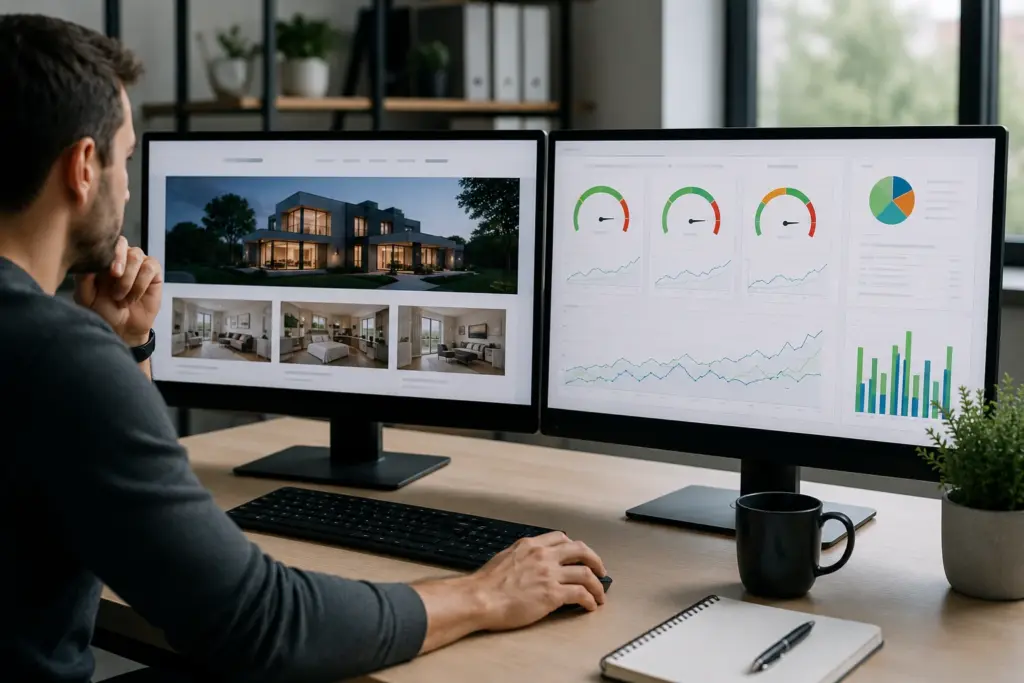
Checking local speed and web vitals

In reality, search engines rank on the following criteria: site structure, load speed, and core web vitals. A site weak in any of those areas hands potential customers directly to competitors whose sites load better and rank higher.

Proven strategies like goal-setting before design and solid technical implementation make a measurable difference, too. For a quick reality check, you can see how your site scores with PageSpeed Insights, and the gaps are usually clear.

In our experience, sites built around business goals consistently produce better search visibility and more inquiries. And Google’s own research confirms that page experience directly affects where your site lands in the results.

Lead Generation, Landing Pages, and Getting People to Act

Most landing pages get visited and forgotten. The heading, the images, and the layout might all look right, but if nobody built the page around a specific lead generation goal, visitors have no real reason to do anything.

The goal comes first, and everything else follows from it:


Business Goal


Page Element It Drives


Book a consultation


Prominent contact form above the fold


Sell a product


Clear pricing with a single call to action


Build an email list


Lead magnet with opt-in form


Drive phone calls


Click-to-call button on mobile

And honestly, poor page structure kills conversions before visitors even get a chance to act. Most landing pages lose people within the first few seconds because the page never makes it clear what to do next.

So naturally, a digital strategy that connects landing pages to specific business objectives produces leads you can track and measure.

Conversion Optimization and What a Goal-Driven Site Delivers

Planning the placement of the website content

Conversion optimization gives every page a specific job: move the visitor toward a decision.

Simply put, the placement of your call to action, the white space around it, and the clarity of your next step all play a direct role in your conversion rates. That applies to all the devices your visitors use.

In fact, a large portion of your traffic arrives on mobile devices, and a site that isn’t mobile-friendly sends those visitors away before they reach your call to action.

What’s more, Google’s own data confirms that mobile-friendly sites rank higher and retain visitors longer, which is why responsive design is a baseline requirement (Google always ranks your mobile site first).

Based on what we’ve seen, a goal-driven site with strong mobile performance consistently outperforms a visually polished one without either.

A Better Website Starts With a Better Goal

Every section of this article points to the same conclusion. A small business website that isn’t built around clear goals costs you leads, visibility, and revenue every single day it stays that way. Most businesses realize this way too late.

So with that in mind, goal-based web design addresses each of those gaps directly. Site structure gets your site found, landing pages get visitors to act, and conversion optimization makes sure every page earns its place.

At Westport Osprey Website Design, we help many people build their sites around what their business truly needs. Reach out, and our team will take you through every step of the process. Your next website should work harder than your last one.
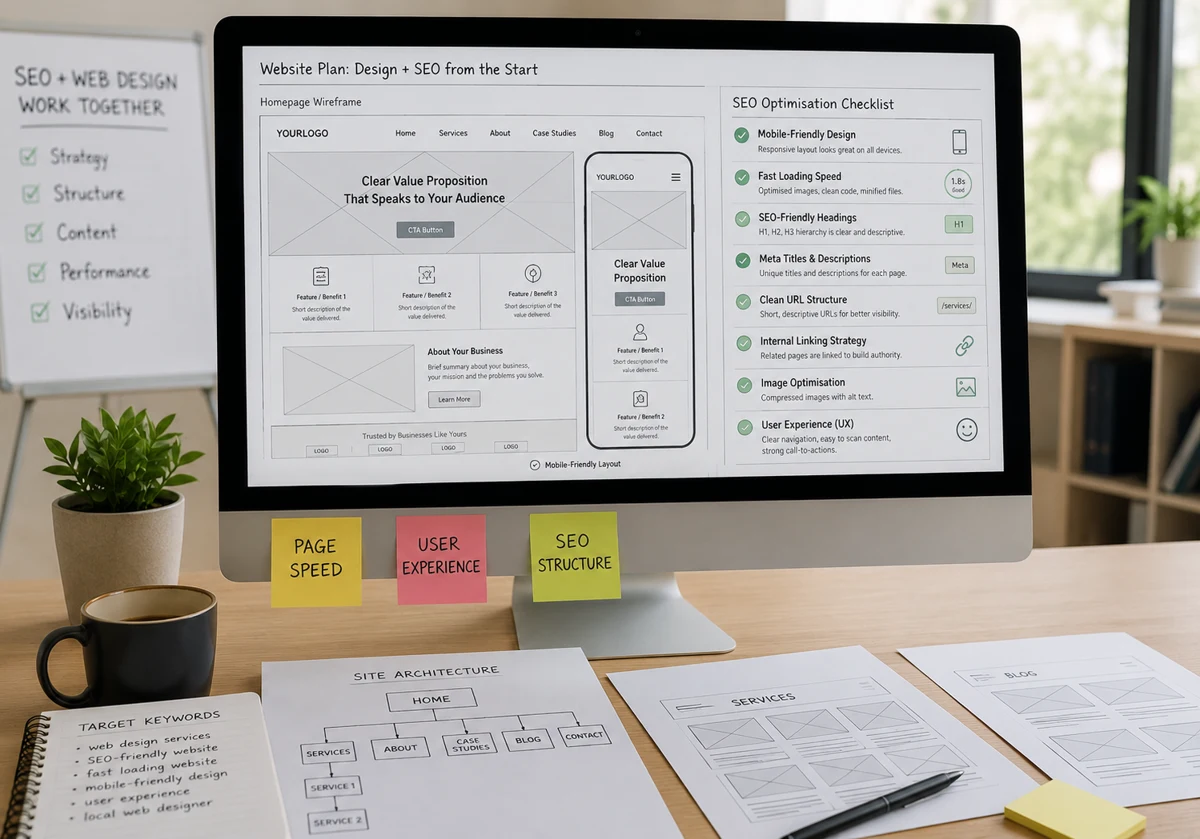
SEO Web Design Integration

How SEO and Web Design Work Better Together

SEO and Web Design work better together because search engines drive traffic to your website, while great design keeps users engaged and converts them into customers. Most businesses treat them like two separate projects. But one team builds the site, another tries to fix it for search engines after launch.

A well-built site does both jobs at once. It loads fast, guides visitors where they need to go, and gives Google exactly what it needs to rank your pages with confidence.

At Westport Osprey, SEO web design integration is baked into every project from the first conversation. After all, a site that looks great but stays buried in search results won’t work for your business.

SEO Web Design Integration: Why Your Site Structure Signifies More Than You Think

SEO Web Design Integration: Why Your Site Structure Signifies More Than You Think

A good website architecture does two things at once. It helps users move through your site naturally, and it gives search engines a clear map of what your site is about. When both work together, your chances of showing up in search results go way up.

Your website’s structure is the invisible backbone that either guides your customers to a sale or drives them straight to a competitor. Before you write a single line of code or copy, remember: search engines can’t rank what they can’t find.

How Google Crawls Your Site and Why It Counts Target

Google doesn’t read your site the way a person does. Instead, it sends out search engine crawlers, basically small automated bots, that follow links thoroughly and understand what’s on your site. If a page has no internal links pointing to it from other pages, those crawlers may never find it.

Here’s what affects how well Google crawls your website’s pages:

  • Crawlable Links: Every important page needs at least one link pointing to it from somewhere else on your site. Crawlers follow links rather than guessing.
  • XML Sitemap: A sitemap acts like a directory. It tells Google which new pages exist and where to find them, especially useful as your site grows.
  • Blocked Resources: Sometimes, pages get accidentally blocked from crawlers through robots.txt settings. When that happens, Google can’t index them even if the content is good.

Ultimately, ensuring your site is easily navigable is the foundation of good SEO. If Google’s crawlers can’t efficiently find, read, and index your pages, even the most exceptional content will remain invisible to your target audience.

Information Architecture: Does Your Layout Make Sense to Search Engines?

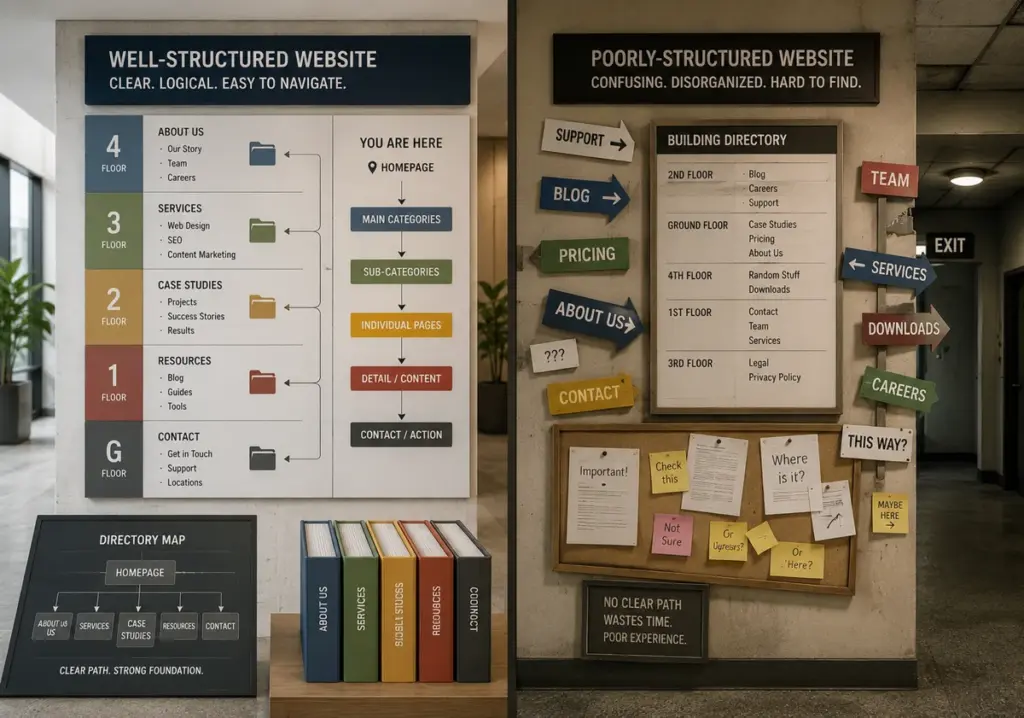
A good structure follows a simple pyramid: homepage at the top, main categories below it, and individual pages underneath those. That logical flow helps search engines understand what your site is about. Let’s see the comparison,

Well-Structured SitePoorly Structured Site
Clear main categories from the homepageRandom pages linked from the homepage
Individual pages under relevant categoriesBlog posts are buried under unrelated sections
Site’s menu reflects page hierarchyMenu items don’t match the site structure

Duplicate Content and Category Pages: A Common Mistake Target

When several pages cover the same topic, Google struggles to pick which one to rank. So instead of one strong page performing well, you get two or three weak ones splitting the same potential.

Category pages are one of the biggest places where duplicate content shows up. For better utilization, use canonical tags to point Google to the primary page, and make sure each page on your site serves a clear, separate purpose.

Technical SEO Basics: Best Practices Built Into Your Web Design

Technical SEO Basics: Best Practices Built Into Your Web Design

Most people think technical SEO is something you sort out after a site launches. But that’s where things get expensive. On the contrary, page speed, mobile responsiveness, and HTTPS are all design decisions that affect your site’s performance and your ranking from day one.

By baking these core technical elements straight into your initial web design, you set a flawless foundation for search engines from the jump. This approach prevents costly redesigns later and ensures your site is primed to rank the moment it goes live.

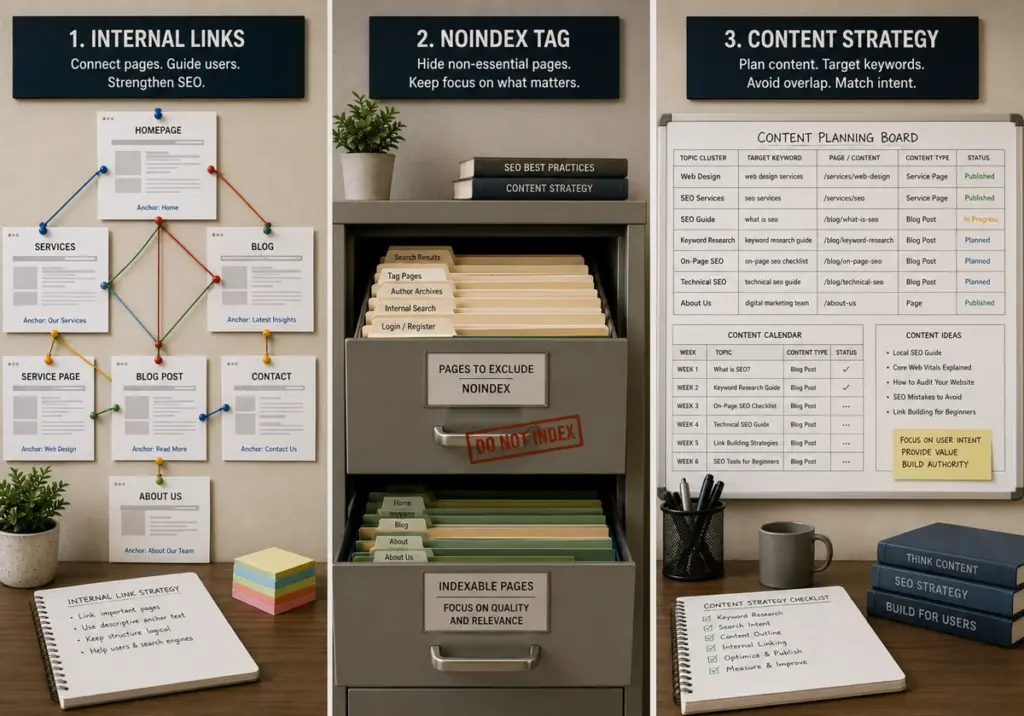
Internal Links, the Noindex Tag, and a Content Strategy That Pulls More Traffic

Without links pointing from other pages to your important pages, even your best content can go unnoticed by search engine crawlers.

A few things worth getting right from the start:

  • Internal Links: Use descriptive anchor text and link to important pages from other pages across your site regularly.
  • Noindex Tag: It prevents Google from indexing low-value pages like thank-you pages or admin URLs, keeping your index clean.
  • Content Strategy: Keyword research helps you write content and assign specific topics to individual pages, so no two pages compete for the same search.

Mastering these three elements ensures your site architecture is airtight and easy for search engines to navigate. With the help of these, you maximize your visibility and stop your own pages from competing against each other.

SEO Web Design Integration: Getting the Technical Side Right

This is where SEO web design integration really shows its value. And, our investigation demonstrated that sites built with these elements in place rank faster and hold their positions longer. Here is what every well-structured site needs:

  • URL Structure: Keep URLs short, descriptive, and consistent across all product pages and category pages.
  • Multiple Languages: If your site serves users in different languages, create separate pages for each language rather than mixing content on one page. In the globalization era, it’s a much-needed feature.
  • Site Grows: As your site grows, certain pages will need revisiting. An SEO expert or design services team should audit regularly to protect your website’s SEO and organic traffic.
  • Structured Data: Add structured data to help Google understand your content better, especially for e-commerce site pages and product categories.

Ready to Stop Losing Traffic to a Site That Wasn’t Built for Search?

SEO and web design aren’t two separate projects. When your site architecture, internal links, structured data, and content strategy all work together, your pages show up in front of the right people in search results.

At Westport Osprey, we handle both sides. Be it homepage or technical SEO basics, every site we build is designed to rank and convert.

Reach out to the Westport Osprey team today. We’ll look at your current site, spot what’s holding it back, and build something that works for both Google and the people landing on your pages. That’s the kind of site that actually grows your business.