
How SEO and Web Design Work Better Together
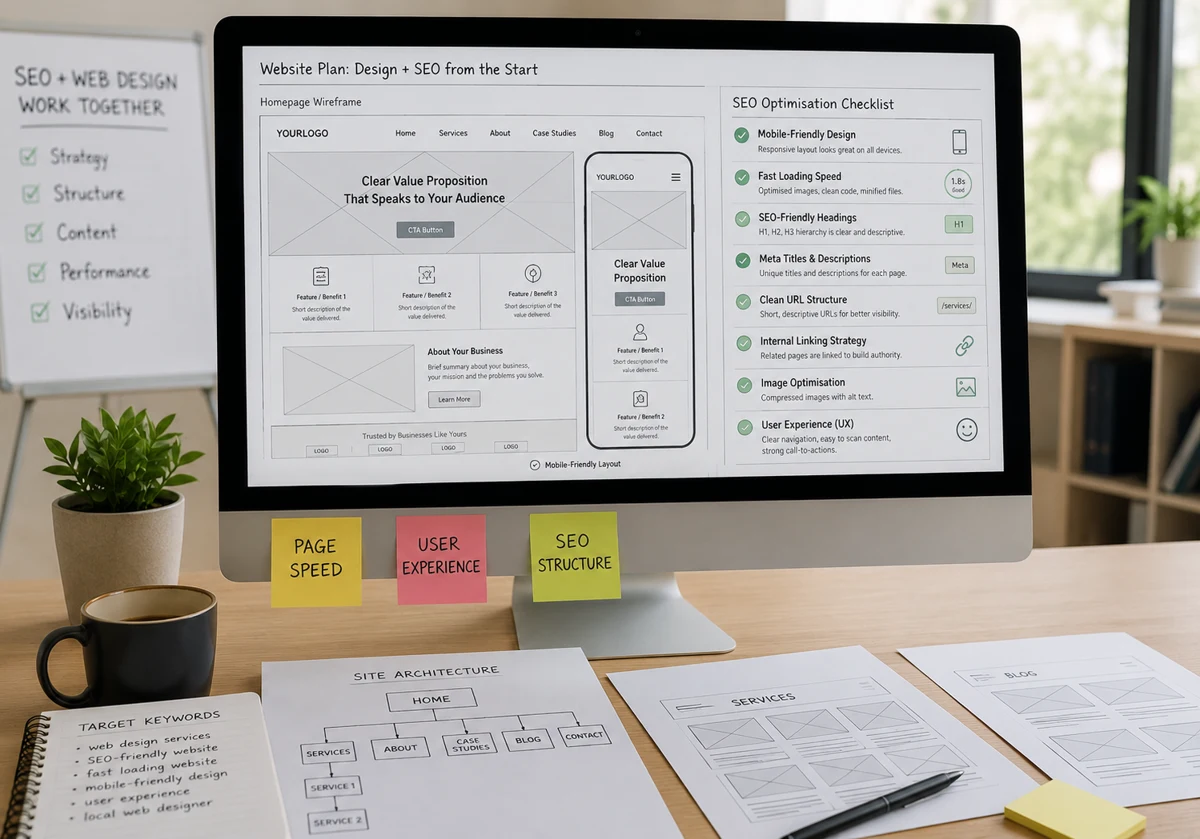
SEO and Web Design work better together because search engines drive traffic to your website, while great design keeps users engaged and converts them into customers. Most businesses treat them like two separate projects. But one team builds the site, another tries to fix it for search engines after launch.
A well-built site does both jobs at once. It loads fast, guides visitors where they need to go, and gives Google exactly what it needs to rank your pages with confidence.
At Westport Osprey, SEO web design integration is baked into every project from the first conversation. After all, a site that looks great but stays buried in search results won’t work for your business.
SEO Web Design Integration: Why Your Site Structure Signifies More Than You Think
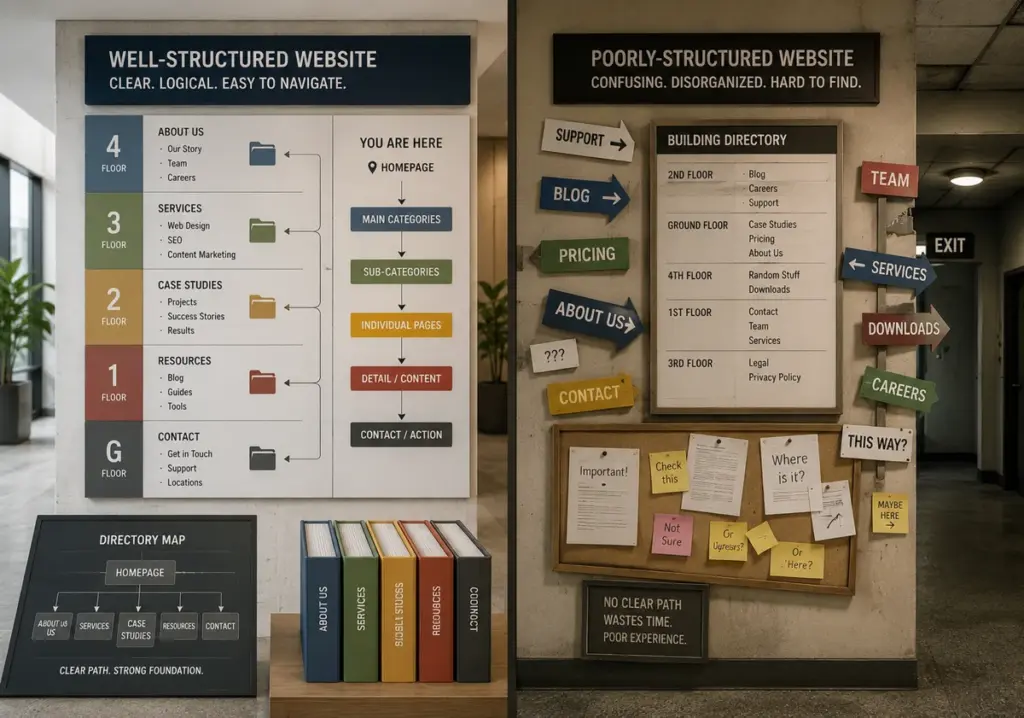
A good website architecture does two things at once. It helps users move through your site naturally, and it gives search engines a clear map of what your site is about. When both work together, your chances of showing up in search results go way up.
Your website’s structure is the invisible backbone that either guides your customers to a sale or drives them straight to a competitor. Before you write a single line of code or copy, remember: search engines can’t rank what they can’t find.
How Google Crawls Your Site and Why It Counts Target
Google doesn’t read your site the way a person does. Instead, it sends out search engine crawlers, basically small automated bots, that follow links thoroughly and understand what’s on your site. If a page has no internal links pointing to it from other pages, those crawlers may never find it.
Here’s what affects how well Google crawls your website’s pages:
- Crawlable Links: Every important page needs at least one link pointing to it from somewhere else on your site. Crawlers follow links rather than guessing.
- XML Sitemap: A sitemap acts like a directory. It tells Google which new pages exist and where to find them, especially useful as your site grows.
- Blocked Resources: Sometimes, pages get accidentally blocked from crawlers through robots.txt settings. When that happens, Google can’t index them even if the content is good.
Ultimately, ensuring your site is easily navigable is the foundation of good SEO. If Google’s crawlers can’t efficiently find, read, and index your pages, even the most exceptional content will remain invisible to your target audience.
Information Architecture: Does Your Layout Make Sense to Search Engines?
A good structure follows a simple pyramid: homepage at the top, main categories below it, and individual pages underneath those. That logical flow helps search engines understand what your site is about. Let’s see the comparison,
| Well-Structured Site | Poorly Structured Site |
| Clear main categories from the homepage | Random pages linked from the homepage |
| Individual pages under relevant categories | Blog posts are buried under unrelated sections |
| Site’s menu reflects page hierarchy | Menu items don’t match the site structure |
Duplicate Content and Category Pages: A Common Mistake Target
When several pages cover the same topic, Google struggles to pick which one to rank. So instead of one strong page performing well, you get two or three weak ones splitting the same potential.
Category pages are one of the biggest places where duplicate content shows up. For better utilization, use canonical tags to point Google to the primary page, and make sure each page on your site serves a clear, separate purpose.
Technical SEO Basics: Best Practices Built Into Your Web Design
Most people think technical SEO is something you sort out after a site launches. But that’s where things get expensive. On the contrary, page speed, mobile responsiveness, and HTTPS are all design decisions that affect your site’s performance and your ranking from day one.
By baking these core technical elements straight into your initial web design, you set a flawless foundation for search engines from the jump. This approach prevents costly redesigns later and ensures your site is primed to rank the moment it goes live.
Internal Links, the Noindex Tag, and a Content Strategy That Pulls More Traffic
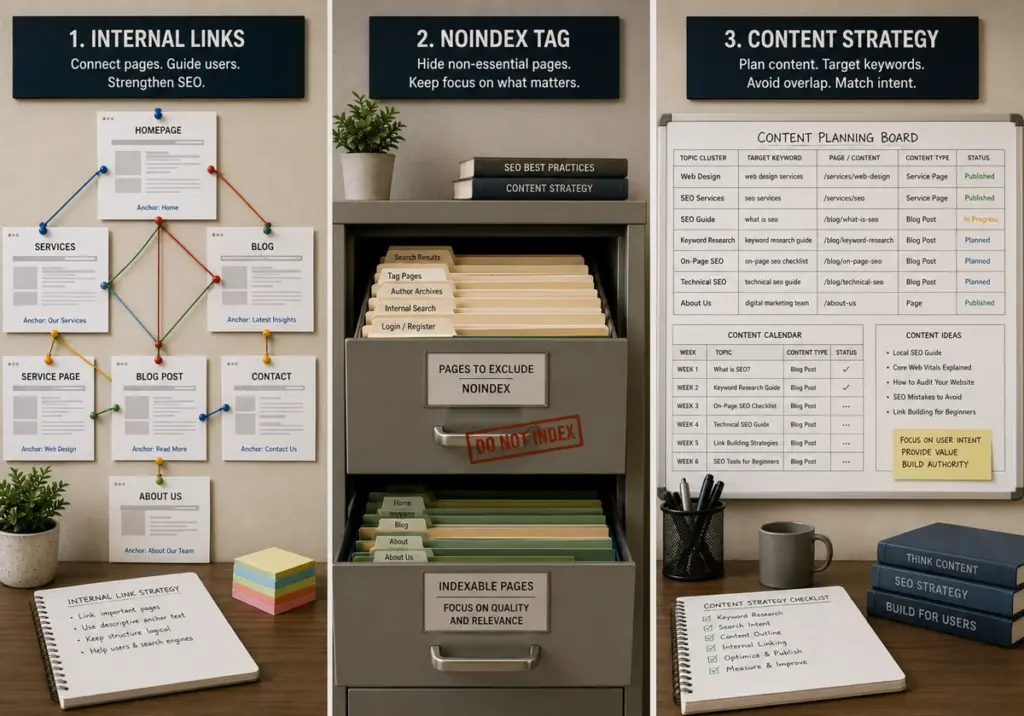
Without links pointing from other pages to your important pages, even your best content can go unnoticed by search engine crawlers.
A few things worth getting right from the start:
- Internal Links: Use descriptive anchor text and link to important pages from other pages across your site regularly.
- Noindex Tag: It prevents Google from indexing low-value pages like thank-you pages or admin URLs, keeping your index clean.
- Content Strategy: Keyword research helps you write content and assign specific topics to individual pages, so no two pages compete for the same search.
Mastering these three elements ensures your site architecture is airtight and easy for search engines to navigate. With the help of these, you maximize your visibility and stop your own pages from competing against each other.
SEO Web Design Integration: Getting the Technical Side Right
This is where SEO web design integration really shows its value. And, our investigation demonstrated that sites built with these elements in place rank faster and hold their positions longer. Here is what every well-structured site needs:
- URL Structure: Keep URLs short, descriptive, and consistent across all product pages and category pages.
- Multiple Languages: If your site serves users in different languages, create separate pages for each language rather than mixing content on one page. In the globalization era, it’s a much-needed feature.
- Site Grows: As your site grows, certain pages will need revisiting. An SEO expert or design services team should audit regularly to protect your website’s SEO and organic traffic.
- Structured Data: Add structured data to help Google understand your content better, especially for e-commerce site pages and product categories.
Ready to Stop Losing Traffic to a Site That Wasn’t Built for Search?
SEO and web design aren’t two separate projects. When your site architecture, internal links, structured data, and content strategy all work together, your pages show up in front of the right people in search results.
At Westport Osprey, we handle both sides. Be it homepage or technical SEO basics, every site we build is designed to rank and convert.
Reach out to the Westport Osprey team today. We’ll look at your current site, spot what’s holding it back, and build something that works for both Google and the people landing on your pages. That’s the kind of site that actually grows your business.
Leave a Reply