Archives June 2026

Custom vs Template Website

Custom Web Design vs Pre-Built Templates: Which Fits Your Business

Choosing between a custom and a template website is an important decision. It influences everything from visual design and user experience to overall business performance.

Templates are quick, affordable, and a good starting point. But as your business grows, you start running into walls, including design elements you can’t change and features you can’t add. On the contrary, custom web design offers greater flexibility and scalability, but it typically requires a larger upfront investment and a longer development timeline.

That’s exactly what this article breaks down. By the end, you’ll know which option actually fits where your business is right now, and where it’s headed.

Custom vs. Template Website: What’s the Real Difference?
Custom vs. Template Website: What's the Real Difference?

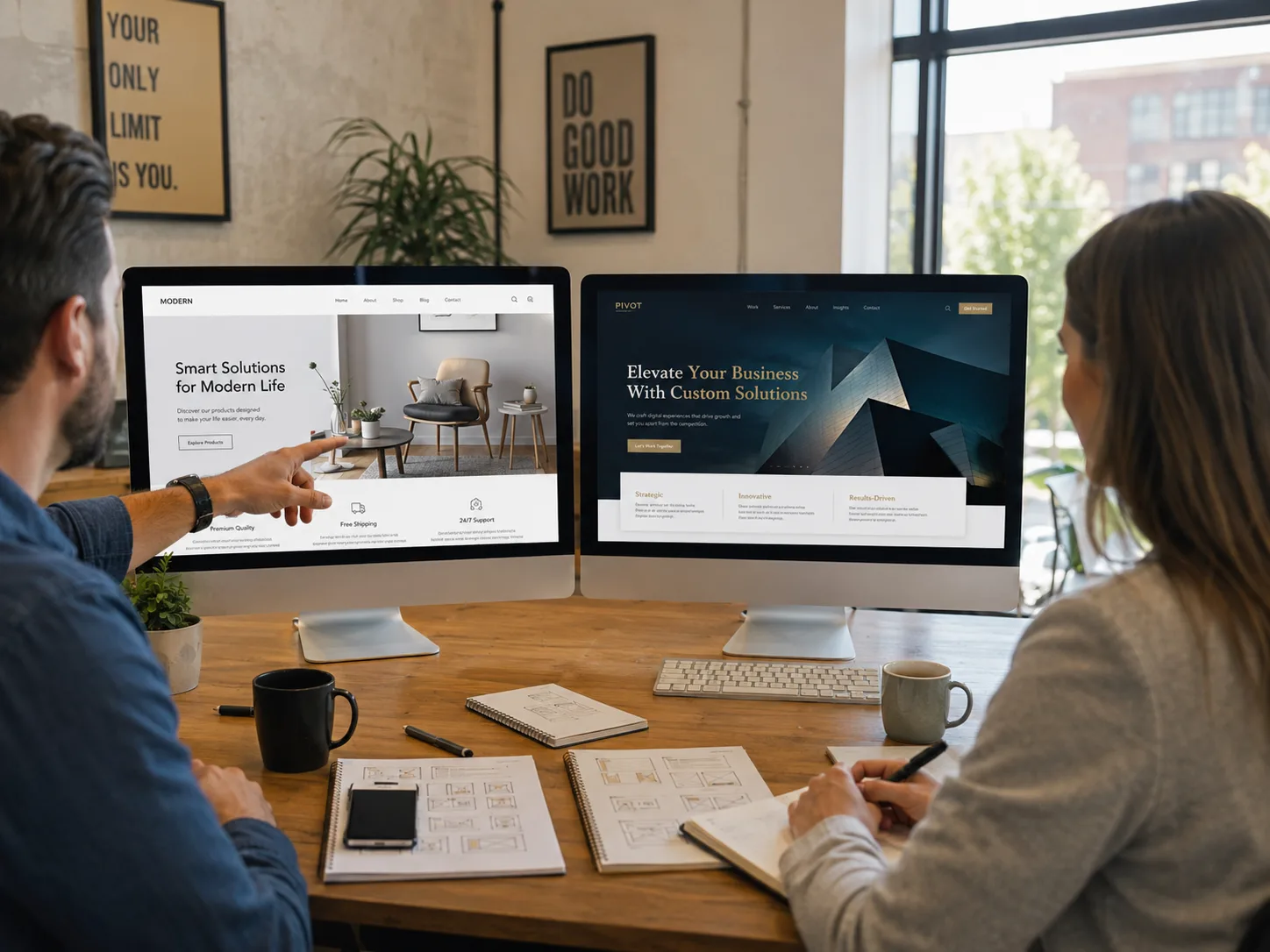
At the most basic level, a custom versus template website comes down to one thing: control. A template website pulls from a library of pre-made designs that thousands of other businesses are already using.

On the other hand, a custom website is built specifically around your business, your audience, and your goals. Both options can get you online. But what they offer beyond that is pretty different.

Here’s a closer look at what each one actually gives you.

What a Template Website Actually Gives You

The best part about template websites is that you can get a decent-looking site live in just a few hours. Most builders give you attractive templates with drag-and-drop tools that require zero coding knowledge. For small projects, that kind of quick setup is honestly hard to beat.

On top of that, Basic features like contact forms, image galleries, and mobile-friendly layouts come built right in. As a result, Builder features cover the essentials pretty well for simple websites.

The trade-off is that customization options are limited once you outgrow those defaults.

What You Get With a Custom Website

Custom websites are designed around the functionality, customer journey, and growth plans your business requires. Here, web designers create custom designs that reflect exactly who you are. That helps to create a stronger first impression, making visitors more likely to trust your business and remember your brand.

Custom-built websites also support advanced features and functionality you won’t find in a standard builder. You own every line of custom code, with no platform restrictions holding you back. For growing businesses, that kind of control makes it easier to scale.

Can Your Own Website Grow With Your Business?
Can Your Own Website Grow With Your Business?

In fact, 81% of customers prefer companies that offer personalized experiences. That statistic alone shows why businesses are increasingly looking beyond one-size-fits-all website solutions. In that case, Flexibility helps businesses adapt and stay competitive as their needs evolve

The problem is, not every website is built to grow with you. Template platforms work great at the start, but they can quickly hit a ceiling when your needs get more specific. Your own website should work for you at every stage, instead of just the early ones.

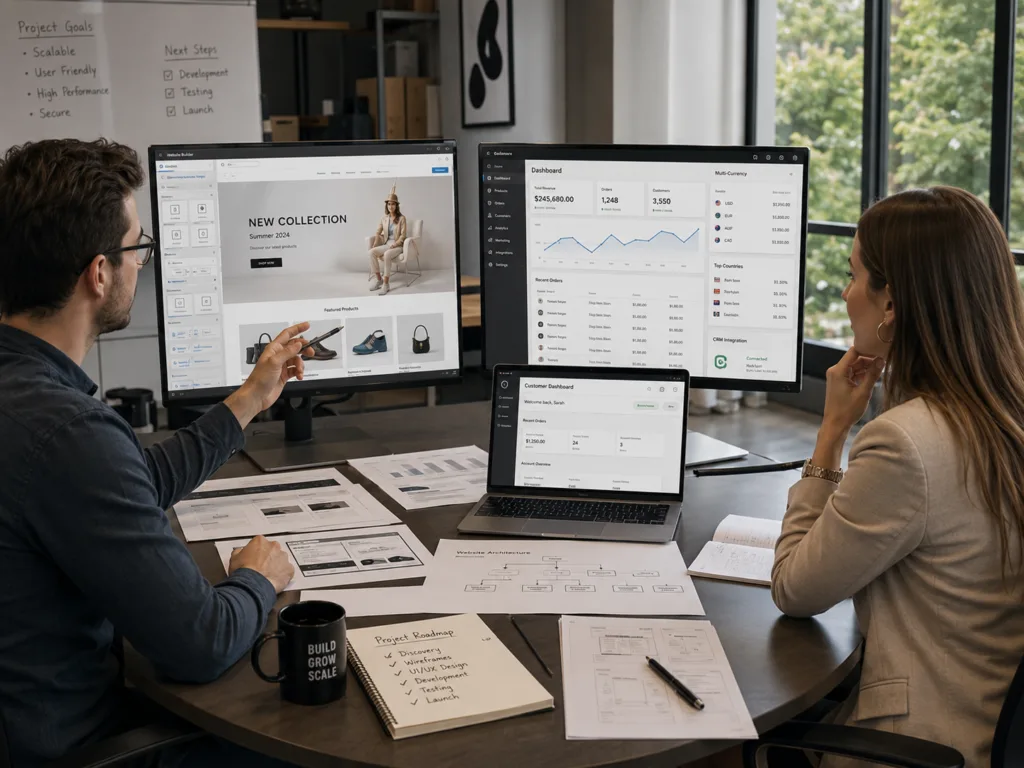
Growth often brings new requirements that weren’t part of the plan when your website first launched. You may need advanced booking tools, customer portals, CRM integrations, or other specialized features.

That’s why it’s worth looking beyond the default features.

Customization Options and Builder Features to Know

Most website builder platforms give you enough to get a small business started without spending much. Tools like the GoDaddy website builder and Squarespace offer clean, ready-to-use layouts.

The issue comes when you need more than the standard builder features. Custom development lets you plug in specific tools and workflows that templates won’t be able to support.

With that flexibility comes the opportunity to focus on the features that matter most, saving your business time and cost. After all, not every tool a builder offers is something you’ll actually use.

Advanced Features vs. Drag and Drop: Which Fits Your Needs?

A drag-and-drop editor works well for simple websites and basic landing page setups. But once your needs grow, those tools start showing their limits.

So, complex websites with e-commerce functionality need a proper custom build. Advanced features like multi-currency support and CRM connections aren’t something a drag-and-drop editor can handle well.

Worth Noting: Small businesses planning to scale should think carefully. The right choice now saves a lot of headaches down the road.

E-Commerce, Key Features, and Third-Party Integrations

Template-based e-commerce sites often come with rigid third-party apps and limited integration options. You get what the platform supports, and not much else. For many businesses, that ceiling shows up sooner than expected.

Custom e-commerce websites connect third-party services through tailored API setups that fit your specific needs. Custom sites support advanced security layers, secure payment gateways, and compliance with standards like PCI-DSS. That goes a long way in building real customer trust.

The customer experience on a custom site also tends to be noticeably better. Key features like personalized recommendations and responsive designs all come together in a way that most template sites just can’t match.

E-Commerce, Key Features, and Third-Party Integrations

AI Tools, Custom Domain, and Long-Term Cost Efficiency

Most business owners don’t realize how much they’re spending on platform fees, plug-ins, and workarounds until they sit down and add it all up. A custom build costs more upfront, no question. But the long-term picture looks pretty different.

Here’s a quick comparison to put things in perspective:

FeaturesTemplate WebsiteCustom Website
Monthly feesOngoing platform costsOne-time build cost
AI toolsBasic built-in automationTailored to your workflow
Custom domain nameOften included as an add-onFully owned and controlled
SecurityPlatform-level onlyAdvanced, business-specific
Frequent updatesOften neededBuilt to your specific needs
SEO controlLimitedFull control over every page

Web hosting, security, and cost all work differently with a custom build. But for businesses focused on long-term digital presence and growth, the numbers tend to work out in their favor.

Your Next Step Toward a Website That Actually Works for You

Now that we’ve covered the key differences, features, and costs, the answer comes down to where your business stands today. Template websites are a solid starting point for simple websites and tight budgets. But if you’re serious about growth, a custom build gives you the room to get there.

Local businesses in Westport and across Connecticut are making this shift more and more. A stronger web presence helps you reach potential customers who are already searching for your services. Better yet, a site built around your goals converts those visitors into actual sales.

At Westport Osprey, we build custom websites that work as hard as you do. Our team of web designers knows exactly what businesses in this area need to stand out online.

Reach out today and let’s talk about what the right website can do for you.
Modern website design trends

What Makes a Website Design Feel Modern to Users

Your website has about 50 milliseconds to make a good first impression. That is a tiny part of time, and most of it comes down to how your site looks and feels at a glance. Modern website design trends have changed what visitors expect, and sites that ignore those changes tend to lose people fast.

This article breaks down the visual and operational elements that make a website feel current, with color palettes, typography, including mobile responsiveness, and the latest web design trends shaping user behavior today.

At Westport Osprey, we work with small businesses across Connecticut to build modern websites that load fast, look sharp, and keep visitors engaged.

What Do Users Actually Expect From Modern Web Design?

Modern web design meets expectations by combining fast load speeds, clean layouts, and intuitive navigation that guides visitors without confusion. People do not want to hunt for information. They scan web pages left to right, and expect the most important content to show up exactly where they look.

Good web design follows those user behavior patterns by design. A user-friendly website puts the right content in the right place, making every page feel natural to move through. That is what separates a site people trust.

The Visual Side: Color Palettes, Fonts, and First Impressions

Color palettes and typography are doing most of the attracting work. Before anyone reads a headline or clicks a button, the visual elements on your page have already set the tone. If visitors get those wrong, even great content will not save you.

The Visual Side: Color Palettes, Fonts, and First Impressions

Consistent visual language across every page builds trust and keeps user engagement strong. In fact, poor font sizing or clashing colors push people away faster than a slow load time ever would.

Below, we explain what delivers better results:

How Color Theory Guides the Way Users Feel

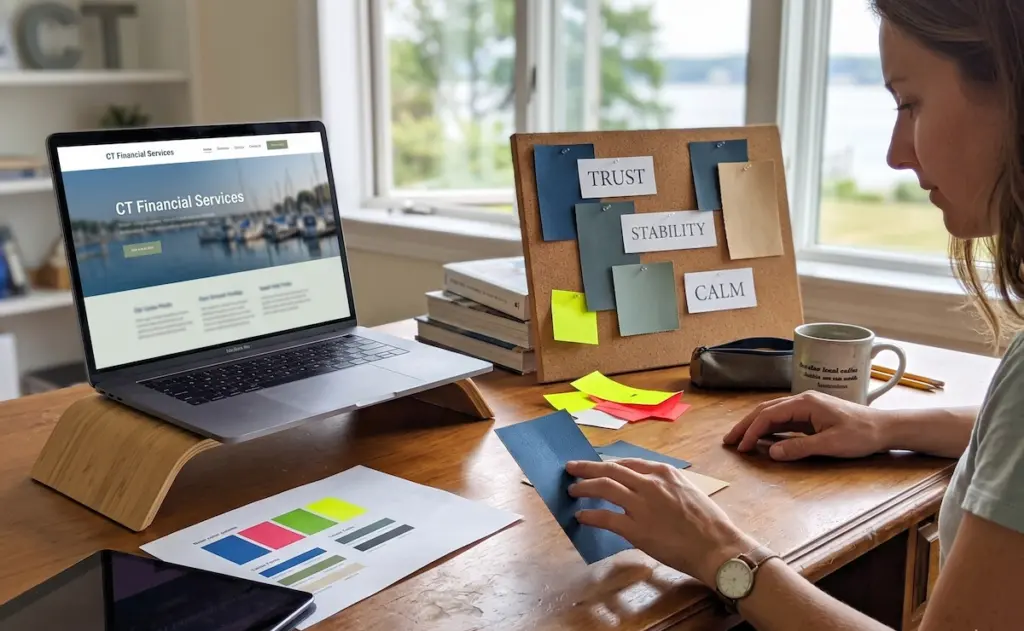
Get color theory right, and your web presence communicates trust, urgency, or calm before a visitor reads a single word. Different hues produce specific emotional responses, and web designers use that to guide their audience toward action.

For instance, blue builds trust, red creates urgency, and green signals safety across global audiences. Choosing the wrong palette for your target audience can undermine credibility.

If you own a financial services page using neon colors appears off immediately. That disconnect is something we see regularly with new clients coming to us from Westport and the surrounding Connecticut area.

Typography and Spacing as Core Design Elements

Color is only half the story. Typography and spacing are just as responsible for a polished page. For instance, tight spacing and small fonts make web pages feel cluttered, which cuts reading time significantly. Good typography uses contrast, hierarchy, and white space to guide the eye naturally down the page.

Font choices also communicate brand personality. A serif looks traditional and established, while a sans-serif reads as clean and current to most people browsing today.

Mobile Responsiveness Is No Longer Optional

Mobile devices now account for over 50% of all global web traffic, according to StatCounter. Most of those people will leave a page that does not display properly on their phone, and they rarely return.

Mobile Responsiveness Is No Longer Optional

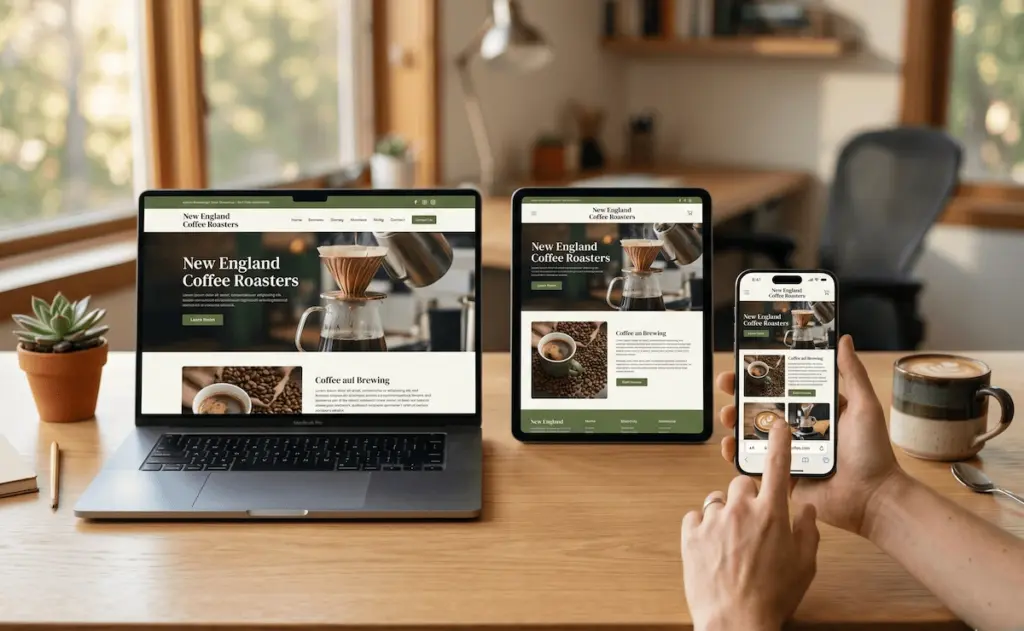
Mobile responsiveness means your layout, buttons, and text adjust automatically across different screen sizes. Search engines like Google rank mobile-friendly pages higher, so poor responsiveness hurts both user experience and search engine rankings directly.

Here is what a responsive website handles without any extra effort on your part:

  • Flexible Layouts: Your web pages reformat automatically to fit any screen, from large desktop monitors to small smartphone displays. This creates a consistent browsing experience that keeps users engaged and reduces bounce rates (no matter how they access your site).
  • Readable Text: No one wants to zoom in just to read. Font sizes adapt to different devices, keeping content clear, comfortable, and easy to scan at a glance.
  • Optimized Images: Well-optimized visuals enhance both speed and user engagement. Images scale perfectly without distortion, helping pages load efficiently while maintaining a sharp, professional appearance on all screen sizes.
  • Clickable Buttons: Easy navigation increases conversions. Buttons and links resize for touch screens, allowing users to navigate without frustration, especially on mobile devices.

A website that handles all four of these well gives your audience a smooth user experience, no matter how they find you.

Dark Mode, Hamburger Menus, and Other Latest Web Design Trends

Staying current with the latest web design trends is one of the fastest ways to keep visitors on your page longer and reduce bounce rates. After all, technological advancements move quickly, and audience expectations follow right behind them.

Today’s visitors notice when a website feels dated. Interactive elements like micro-animations, dynamic content, and personalized experience features have become part of what makes digital experiences feel fresh. Knowing which trends add real value versus which ones distract helps businesses make smarter decisions.

Dark Mode and Its Effect on User Engagement

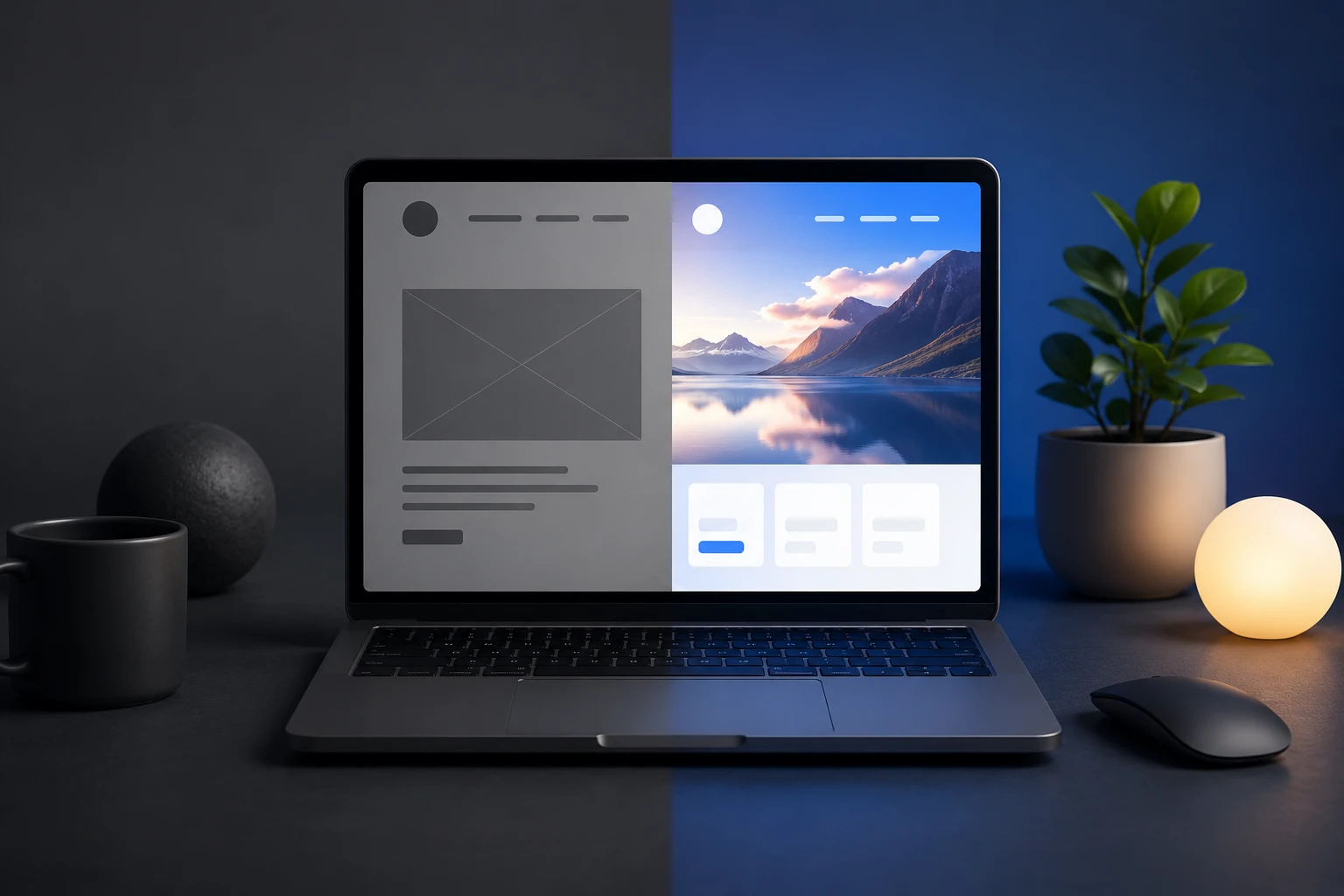
Dark mode has gone from a novelty to a genuine preference for millions of people worldwide. Apple and Google both introduced system-wide dark mode across their platforms, and web designers followed quickly with matching options on their pages.

The appeal is practical. This setting reduces eye strain and extends screen time, especially for anyone browsing late at night. Not to mention, pages offering a dark theme toggle tend to see longer session durations, which is a positive signal for user engagement and search rankings.

The Hamburger Menu: Handy or Harmful?

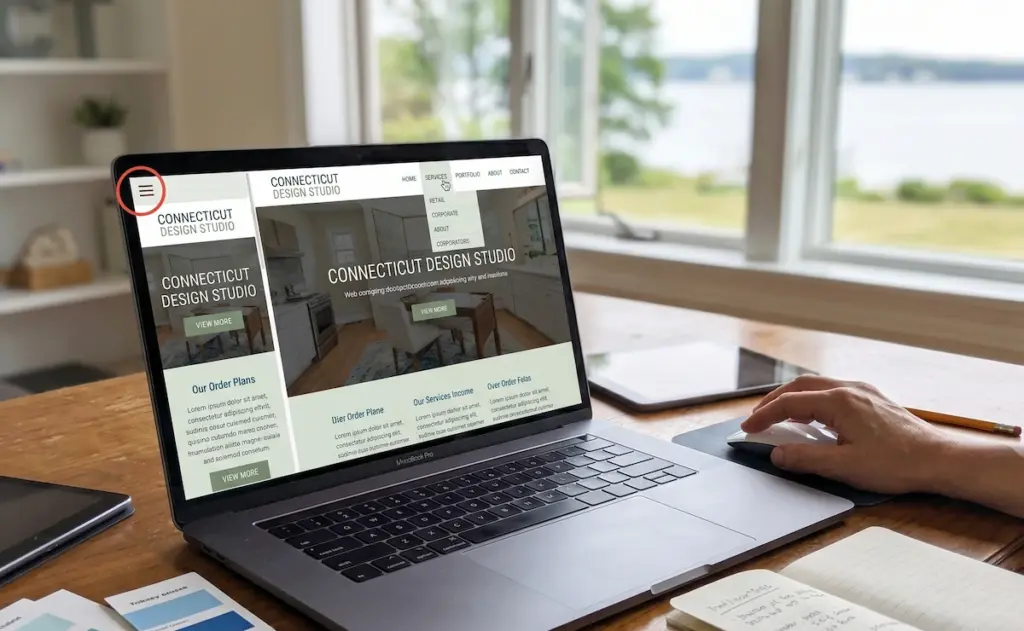
That three-line icon in the corner of your screen has sparked more debate in web design circles than almost anything else. The hamburger menu hides navigation behind those three lines, saving screen space and keeping the home page clean for first-time visitors.

The Hamburger Menu: Handy or Harmful?

On mobile, it works well and allows users to tap through a tucked-away menu naturally. On desktop, though, it reduces discoverability and pushes bounce rates up by burying navigation that your audience expects to see immediately.

Quick Tip: Test navigation visibility against your conversion rate to decide whether a hamburger menu suits your build.

Key Elements That Define Good Web Design

Good web design comes down to a handful of important elements that every modern page should have in place. Take a look at this quick breakdown:

Element

What It Does

Visual Hierarchy

Guides the eye to the most important content first

White Space

Reduces visual clutter and makes pages easier to read

Mobile Responsiveness

Ensures your build works cleanly across all screen sizes

Page Speed

Keeps people on the page and supports search engine rankings

Call to Action

Points visitors toward the next step on every page

Usability

Makes every interaction feel natural and user-friendly

A well-designed website hits all six of these. Skipping usability tests before launch is one of the most common mistakes we see, and it shows up in bounce rates and poor search rankings.

Ready to Give Your Website a Modern Feel?

Modern website design trends move fast. Visitors expect clean layouts, fast load speeds, and design elements that feel current the moment they land on your page. Falling behind means losing people to sites that simply look and work better.

Fortunately, updating your online presence does not require starting from scratch. Small changes to your color palettes, typography, mobile responsiveness, and overall user-friendly structure can make a real difference to your conversion rate and search rankings.

Westport Osprey helps Connecticut businesses build modern web design that works. Reach out today and let us show you exactly what your page needs.

website first impression

How Website Design Affects First Impressions and Trust

Have you ever landed on a website and felt something was off, even before you could explain why? Maybe the colors felt wrong, the layout looked messy, or the site didn’t feel trustworthy. So you left.

That gut reaction happens fast. Research shows that visitors form a first impression of a website in about 50 milliseconds. That’s quicker than a blink. And once that impression is set, it’s hard to shake.

This article breaks down how website design reforms credibility from the moment someone lands on your page, and what you can do about it.

The Psychology Behind a Website’s First Impression

A website’s first impression is formed almost entirely by design, and it happens faster than most people realize. Before a visitor reads your headline or checks your services, their brain has already made a snap judgment. That judgment is based on what they see, rather than what they read.

Studies show that 94% of first impressions are design-related. So if your site looks outdated or cluttered, visitors will question the business behind it, no matter how good your actual offering is. The design is the first handshake, and a weak one sends people straight to your competitor.

What User Research Says About Those First Few Seconds

What if your website is losing visitors before they even read your headline? The process of forming an impression starts the moment a page loads. In fact, research shows users make design-based judgments before a single word is processed.

Eye-tracking user research confirms that visitors scan pages in an F-pattern, focusing on the top-left area first. UX design studies also show that poor load speed and broken layouts are among the fastest ways to destroy a first impression.

As we already mentioned, users decide to stay or leave in under 50 milliseconds, and your site either earns that split-second or loses it.

The Role of UI Design in Building Trust

The Role of UI Design in Building Trust

The best part about clean UI design is that it does the trust-building work before a visitor reads a single word. Good visual design creates what researchers call cognitive ease. And when users feel at ease, they’re far more likely to stick around.

Visual elements like consistent fonts, color schemes, and spacing signal that a business is organized and reliable. Building trust through UI design means creating a site that feels predictable and safe, rather than flashy graphics. When users interact with a well-structured layout, it naturally builds confidence in the brand behind it.

Trust Signals: What Builds Credibility and What Raises Red Flags

Trust signals are the specific design and content elements that tell visitors your site is safe, real, and worth their time. And website credibility lives or dies by them. If your site is missing these, visitors won’t stick around long enough to read your pitch.

Here are the red flags that hurt credibility fast, and what to do instead:

  • No SSL certificate: A site without HTTPS feels risky, and most browsers now flag it as “Not Secure.” That alone kills trust before a visitor reads a single line.
  • Generic stock photos: Real businesses use real images. Overly polished, obviously fake stock photos signal that there’s no genuine team or story behind the business, and users pick up on that fast.
  • Missing contact details: If visitors can’t find a phone number, email, or address, they assume the worst. Legitimate businesses make it easy to get in touch.
  • Outdated fonts and broken links: These signal neglect. If a site is broken, outdated, or neglected, users assume the business behind it is equally disorganized or no longer operational.

Honestly, businesses that display trust signals clearly give visitors every reason to stay. Those who don’t make it very easy to leave.

Social Proof and Professional Design That Work Together

Social Proof and Professional Design That Work Together

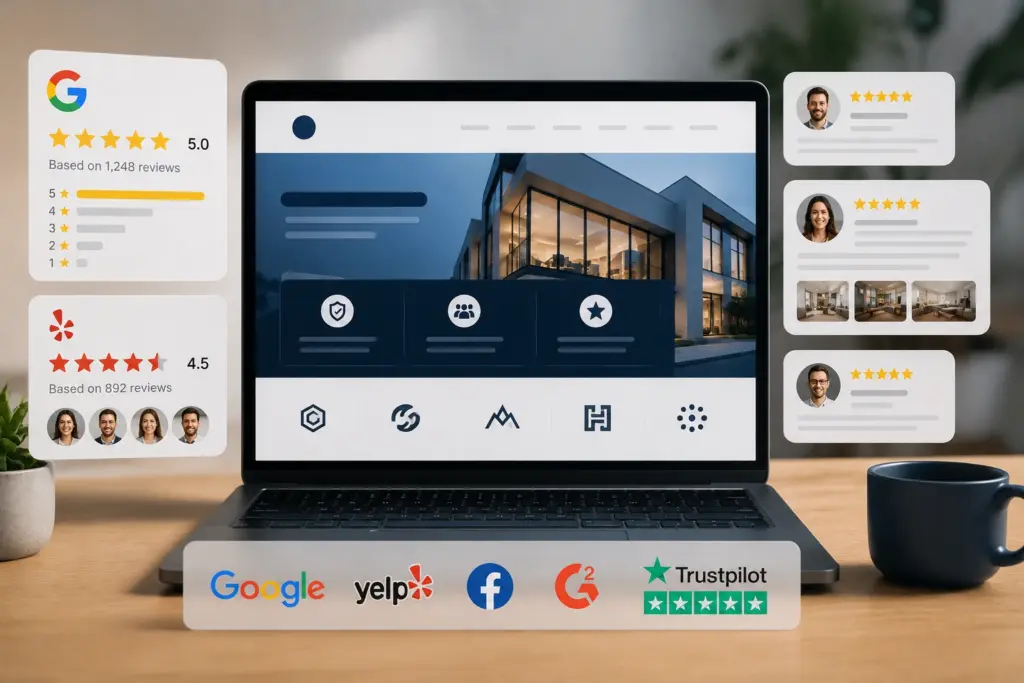
When social proof and professional design work together, they give visitors every reason to stay and zero reasons to leave. Customer testimonials with real names and photos help businesses build trust and make potential customers feel more confident about choosing their services.

Positive reviews from platforms like Google or Yelp add another layer of credibility because they come from verified users, not the business itself. And if you’ve worked with established brands, show it. Logos of recognizable clients or features in news outlets signal authority to first-time visitors in a way that words alone never could.

Cohesive branding ties all of this together. After all, a site that looks polished and consistent makes social proof feel credible. That combination is what turns a skeptical visitor into a confident one.

The Information Architecture Red Flags Visitors Notice First

Most visitors won’t tell you why they left your site. But information architecture problems are usually the reason. Confusing navigation and buried contact details are the most common user needs that sites fail to meet.

Information architecture is simply how your site is organized. Think of it as the blueprint behind your navigation, page structure, and content flow. When it’s done well, users interact with your site without even thinking about it. When it’s off, visitors feel lost and leave.

Based on our experience, visitors expect to find pages like About, Services, and Contact within two clicks or less. But broken links and dead ends can quickly derail the user journey. A disorganized site structure makes visitors feel like the business has something to hide, and that feeling is hard to recover from.

The Design Process That Turns First Impressions Into Real Trust

The Design Process That Turns First Impressions Into Real Trust

Now that we’ve covered what trust signals look like, let’s talk about the design process that actually puts them in place. It goes a lot deeper than picking colors and fonts.

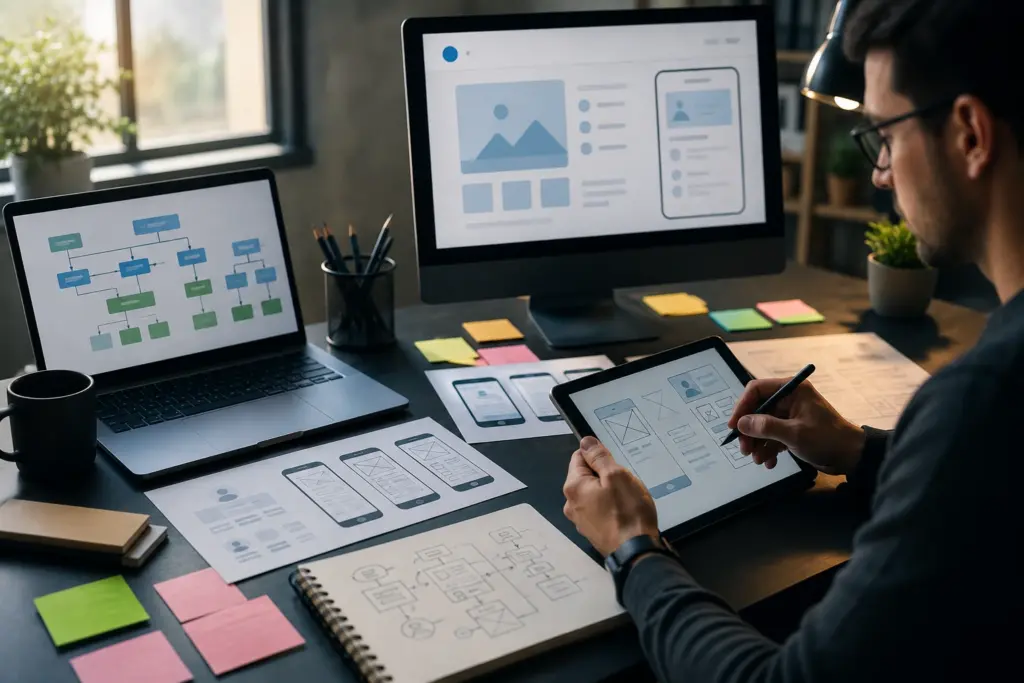
UX designers don’t just make sites look good. They study the target audience, map out user journeys, and identify pain points before a single design idea hits the screen. That research structures every decision, from layout to color to copy.

Usability testing and contextual inquiry are also part of this process, which makes sure the final product meets user expectations. For Westport businesses, good ux design aligned with your specific business goals will always outperform a site built on guesswork.

Now’s the Time to Make Your Website Work for You

Fortunately, fixing your website’s first impression doesn’t require a complete overhaul. Small, deliberate changes to your design, trust signals, and information architecture can make a real difference to your digital presence.

Here’s where to start:

  • Review your site for red flags like missing contact details and broken links
  • Add customer testimonials and real team photos to build social proof
  • Make sure your branding is cohesive across all pages
  • Check that your site feels equally strong on different platforms and screen sizes

Westport Osprey helps local Westport businesses build websites that earn trust from the very first click. If your site isn’t building trust, it’s losing business. Contact us to fix that.

Local Business Web Design built around goals

Why Local Businesses Need Websites Built Around Their Goals

Let’s be honest, a website without a real goal won’t bring in calls, fill out forms, or push people toward a purchase. Most small businesses figure this out after the site goes live and the phone stays quiet (when it’s too late!).

That delay costs time, money, and customers you won’t get back. But when your business goals drive the design, every page gives visitors a clear next step, and your marketing connects naturally.

This article covers why goal-based web design produces better results for local businesses and what it looks like when it’s done right. Read through, and see where your current site is falling short.

The Local Business Web Design Problem

A good-looking Website doesn't mean a well-performing site

Most local business web design prioritizes how a site looks over what it needs to perform well.

A site without a strategy is like opening a store with no products on the shelves. People walk in, look around, and leave without buying anything. Search engines react the same way.

These are the issues that hold most sites back:

  • Appearance Over Objectives: Web design projects usually start with colors, fonts, and layouts, and business objectives never make it onto the list. A polished site with no strategic direction gives visitors nothing to act on.
  • Search Engine Visibility: Search engines rank sites based on structure, load speed, and core web vitals, and none of those come standard with a visually focused build. Without those foundations, your site stays invisible to the people searching for it.

A website that looks fine but produces no results isn’t a cheap mistake. The longer it runs without a strategy, the more revenue you lose.

What Goal-Based Website Design Really Looks Like

The whole process starts with one question: “What does your business need this site to accomplish?

That answer drives the design decisions, the layout choices, and the calls to action across the entire site. In other words, a website built around clear goals works like your best sales department.

This is what that looks like when it’s done right:

The Goal Comes Before the Design

Before anything gets designed, goal-based web design identifies what the business needs the site to accomplish.

Take phone calls as an example. A phone call goal puts your contact details above the fold, with the entire site pushing visitors toward picking up the phone. A lead generation goal, in that case, centers on the opt-in form and the offer.

The goal determines the build, and honestly, most sites skip that conversation entirely.

Every Page Gets a Job

And that goal-driven approach carries through the entire site. The homepage builds trust, the services page answers objections, and the contact page makes it easy to reach out, so every visitor always has a clear next step in front of them.

We’ve seen businesses double their inquiry rate simply by giving each page a defined role and sticking to it.

Custom Beats Generic Every Time

A website builder gets a site live fast, which isn’t the same as functional. A good web design team builds custom websites around your specific business objectives, your target audience, and your brand’s message.

Unlike a drag-and-drop template, a custom site is built around your specific needs, and the results reflect that directly.

How Your Business Website Shows Up on Search Engines

Checking local speed and web vitals

In reality, search engines rank on the following criteria: site structure, load speed, and core web vitals. A site weak in any of those areas hands potential customers directly to competitors whose sites load better and rank higher.

Proven strategies like goal-setting before design and solid technical implementation make a measurable difference, too. For a quick reality check, you can see how your site scores with PageSpeed Insights, and the gaps are usually clear.

In our experience, sites built around business goals consistently produce better search visibility and more inquiries. And Google’s own research confirms that page experience directly affects where your site lands in the results.

Lead Generation, Landing Pages, and Getting People to Act

Most landing pages get visited and forgotten. The heading, the images, and the layout might all look right, but if nobody built the page around a specific lead generation goal, visitors have no real reason to do anything.

The goal comes first, and everything else follows from it:


Business Goal


Page Element It Drives


Book a consultation


Prominent contact form above the fold


Sell a product


Clear pricing with a single call to action


Build an email list


Lead magnet with opt-in form


Drive phone calls


Click-to-call button on mobile

And honestly, poor page structure kills conversions before visitors even get a chance to act. Most landing pages lose people within the first few seconds because the page never makes it clear what to do next.

So naturally, a digital strategy that connects landing pages to specific business objectives produces leads you can track and measure.

Conversion Optimization and What a Goal-Driven Site Delivers

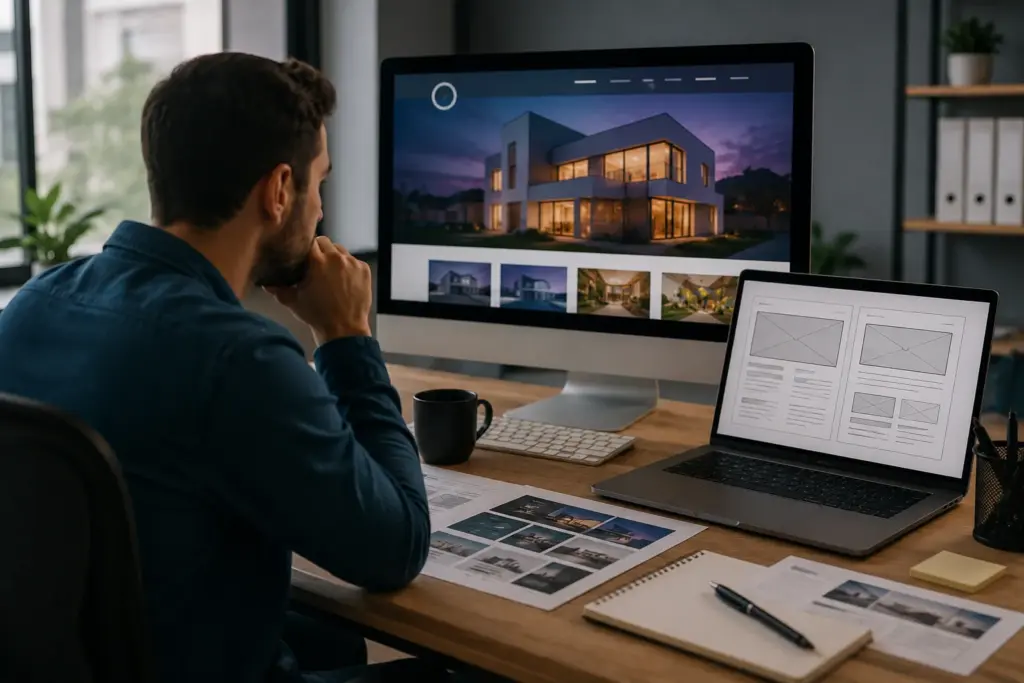
Planning the placement of the website content

Conversion optimization gives every page a specific job: move the visitor toward a decision.

Simply put, the placement of your call to action, the white space around it, and the clarity of your next step all play a direct role in your conversion rates. That applies to all the devices your visitors use.

In fact, a large portion of your traffic arrives on mobile devices, and a site that isn’t mobile-friendly sends those visitors away before they reach your call to action.

What’s more, Google’s own data confirms that mobile-friendly sites rank higher and retain visitors longer, which is why responsive design is a baseline requirement (Google always ranks your mobile site first).

Based on what we’ve seen, a goal-driven site with strong mobile performance consistently outperforms a visually polished one without either.

A Better Website Starts With a Better Goal

Every section of this article points to the same conclusion. A small business website that isn’t built around clear goals costs you leads, visibility, and revenue every single day it stays that way. Most businesses realize this way too late.

So with that in mind, goal-based web design addresses each of those gaps directly. Site structure gets your site found, landing pages get visitors to act, and conversion optimization makes sure every page earns its place.

At Westport Osprey Website Design, we help many people build their sites around what their business truly needs. Reach out, and our team will take you through every step of the process. Your next website should work harder than your last one.